Cipro is the brand name for ciprofloxacin, a fluoroquinolone antibiotic used to treat certain bacterial infections. For anyone searching where can i buy cipro over the counter, the most important point is that ciprofloxacin should be used only under medical direction because antibiotic choice, dose, and duration depend on the infection being treated and the patient’s risk factors.
Review the current Cipro listing and confirm the product details, checkout requirements, and safety information before ordering.
Choose the strength and offer details only after checking whether prescriber review and usage instructions match your treatment plan.
Before choosing a seller or comparing offers, it helps to understand what Cipro is indicated for, how it is taken, and which safety issues require prescriber review. That context matters more with ciprofloxacin than with many routine medicines because misuse can lead to treatment failure, avoidable side effects, and antibiotic resistance.
What Cipro is used for
Cipro contains ciprofloxacin hydrochloride and is supplied as film-coated tablets in strengths including 250 mg, 500 mg, 750 mg, and 1000 mg. It works by blocking bacterial enzymes involved in DNA replication, which stops susceptible bacteria from multiplying.
It is used for selected infections caused by susceptible organisms, including some respiratory, ear, sinus, urinary tract, gastrointestinal, skin, soft tissue, bone, and joint infections. It may also be used in specific high-risk situations such as inhalational anthrax exposure, but those uses require clear clinical justification.
Because ciprofloxacin is an antibiotic rather than a symptom-relief medicine, it is not appropriate for self-selected treatment of any unexplained fever, cough, urinary symptoms, or diarrhea. The infection type and likely bacterial susceptibility matter.
- Available tablet strengths may differ by seller and market.
- Not every infection is an appropriate reason to use ciprofloxacin.
- Antibiotic selection should reflect the suspected organism and local resistance patterns.

Is Cipro an over-the-counter antibiotic?
For buyers using the keyword where can i buy cipro over the counter, the practical answer is to verify the legal and clinical requirements shown on the pharmacy page before checkout. Ciprofloxacin is a medicine that warrants clinician oversight because contraindications, interactions, and dose adjustments can materially affect safe use.
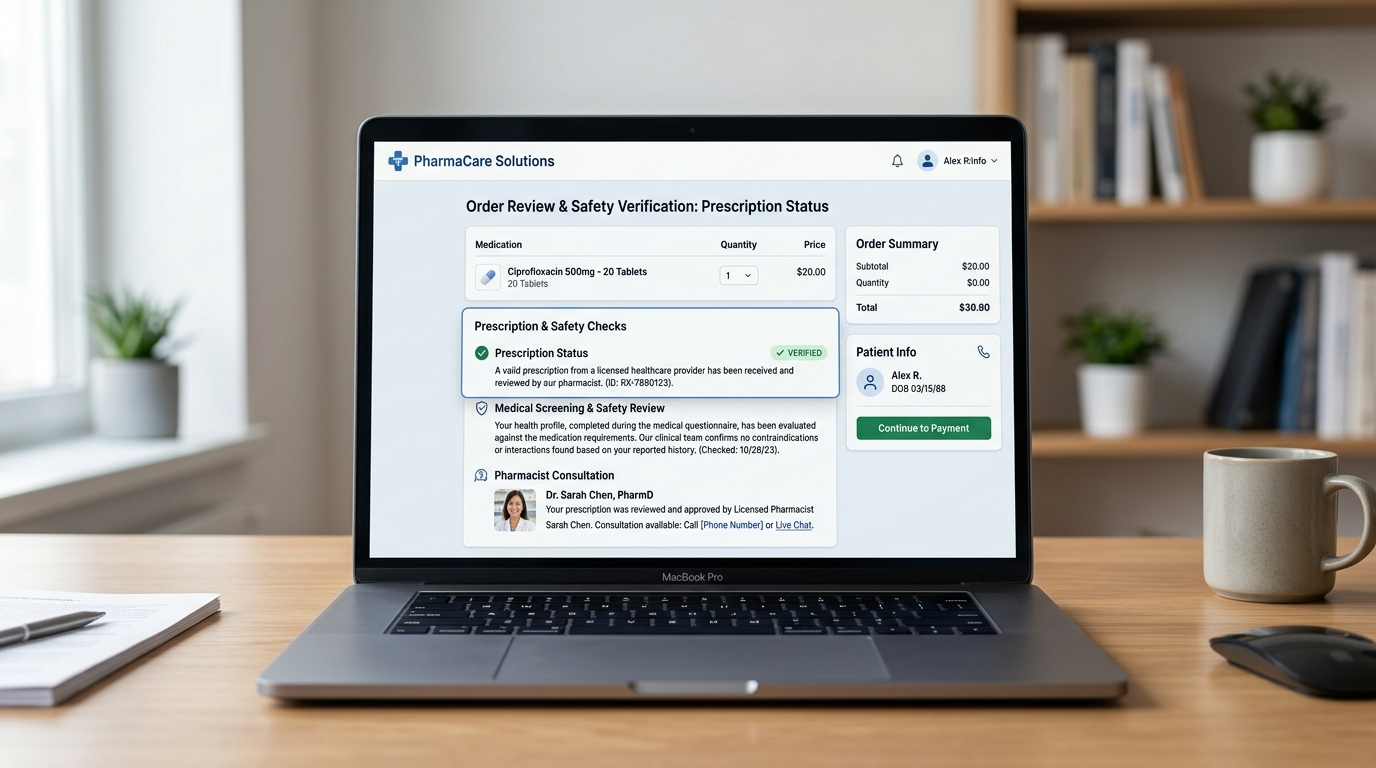
If an online pharmacy lists Cipro, review how it handles prescription status, medical screening, and pharmacist support. A legitimate listing should make room for prescription handling, product labeling, patient information, and safety guidance rather than treating the medicine like a casual retail item.
If commercial details such as checkout requirements or prescription review are not clear, rely on the offer page and pharmacy policy documents instead of assumptions. For this product, transparent handling of medical requirements is more important than convenience claims.
- Check whether the listing explains prescription handling clearly.
- Look for access to the patient information leaflet or product labeling.
- Avoid any seller that provides little or no safety information.
- Use the pharmacy’s stated checkout requirements and legal terms as the deciding reference.

How Cipro is commonly taken
Cipro tablets are swallowed whole with water and should not be chewed. They may be taken before or after food, although absorption can be faster on an empty stomach.
The product information in the brief describes usual adult dosing at 250 to 500 mg twice daily, with higher doses such as 750 to 1000 mg twice daily reserved for severe infections. Treatment duration varies with the indication and may range from several days to several weeks.
Dose selection should not be guessed from symptoms alone. Older adults and people with reduced kidney function may need individualized dosing, and children are generally limited to strict indications with careful benefit-risk assessment.
- Take doses at the same times each day.
- Take with water, not milk or calcium-fortified drinks.
- Do not double the next dose if one is missed.
- Finish the prescribed course unless a clinician tells you to stop.
Food, supplements, and medicine interactions to check first
Ciprofloxacin has several practical interaction issues that buyers should review before ordering. Antacids and supplements containing iron or zinc can reduce absorption, so timing matters.
The brief also lists concomitant tizanidine use as a contraindication. In addition, people taking other medicines that may affect the nervous system, blood sugar, heart rhythm, or seizure threshold should ask a clinician or pharmacist to review the regimen before starting treatment.
This is also a medicine for which hydration and daily routine matter. The tablets should be taken consistently, and people should avoid trying to offset a missed dose by taking extra medication later.
- Separate from antacids, iron, and zinc according to product instructions.
- Do not combine with tizanidine.
- Ask about review if you take multiple prescription medicines or supplements.
- Avoid taking the tablet with milk or calcium-containing drinks.

Safety issues that should not be overlooked
Cipro is generally tolerated by many patients, but it can cause gastrointestinal upset, headache, dizziness, insomnia, rash, and photosensitivity. More serious problems can include tendon inflammation or rupture, heart rhythm changes, and blood sugar disturbances.
Stop taking the medicine and seek prompt medical advice if joint or tendon pain develops. Persistent or severe diarrhea during or after treatment also needs medical assessment because antibiotic-associated colitis must be considered.
The brief lists important contraindications and cautions, including hypersensitivity to fluoroquinolones, pregnancy, lactation, and certain pediatric uses. Extra care is needed in people with epilepsy, cerebrovascular disease, prior tendon disorders, or impaired renal function.
- Use caution with driving or machinery if dizziness or reduced concentration occurs.
- Avoid excessive sun exposure and UV tanning.
- Do not continue prolonged or uncontrolled antibiotic use.
- Review official product labeling and patient information before starting treatment.
What to check before choosing a pharmacy listing
When comparing sellers, focus on pharmacy quality signals rather than marketing promises. A useful product page should identify the medicine clearly, show available strengths, explain medical review or prescription handling, and provide access to safety information.
Price can be compared only within what is actually listed on the offer page. If exact costs, delivery terms, or availability are not stated, do not infer them. Use the seller’s published checkout details, dispensing conditions, and contact information to judge whether the listing is suitable.
For a medicine like ciprofloxacin, the safest purchase path is one that supports appropriate prescribing review and makes it easy to confirm the right strength, directions, and warnings before payment and again before first use.
- Confirm the exact strength and pack details.
- Read the pharmacy’s checkout and dispensing requirements.
- Check whether pharmacist or prescriber review is available.
- Make sure labeling and patient information are accessible before purchase.